

Tax season can feel especially complicated for physicians. Between demanding schedules, multiple income streams, and evolving tax extension rules, it is not unusual for medical professionals to feel pressed for time when April arrives. Many physicians find themselves wondering whether requesting additional time could make the process easier and more accurate.
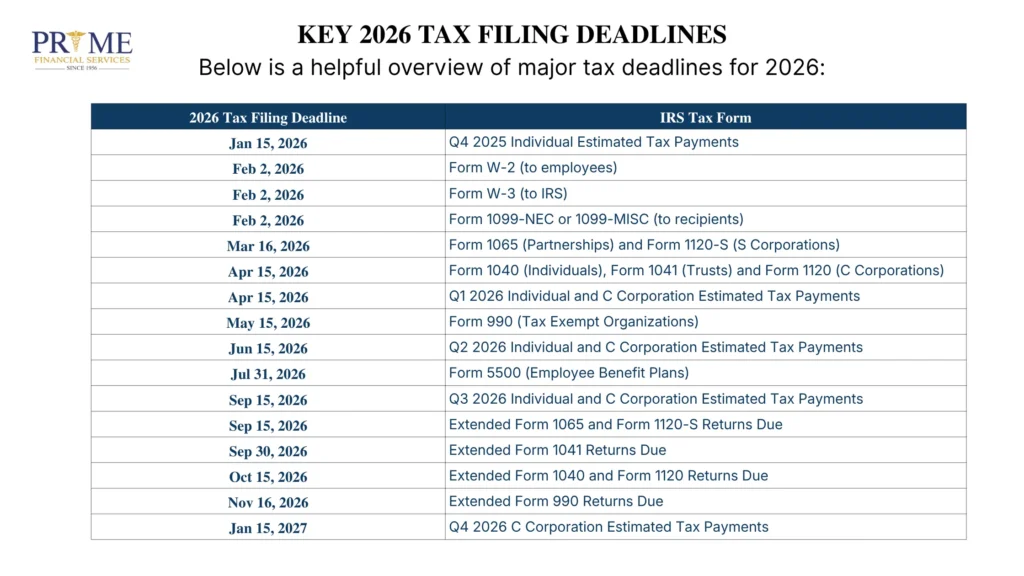
Understanding the timeline matters first. Many physicians ask, when are taxes due 2026? Once the return is filed, physicians often want to know when funds may arrive, which is why reviewing the tax refund schedule can help estimate refund timelines.
For most taxpayers in the United States, the filing deadline will remain mid April unless the IRS announces changes. Knowing the key 2026 tax dates can help physicians decide whether they should submit their return immediately or request additional time to organize their finances.
Before making that decision, it helps to understand what an extension actually does and how it fits into the broader tax filing deadlines 2026.
What Is a Tax Extension?
A Tax Extension allows taxpayers to request additional time to submit their tax return paperwork to the IRS. For physicians who are still waiting for documents such as partnership statements, K-1 forms, or investment records, this extra time can reduce the pressure to rush through complicated calculations.
However, an extension only applies to filing the return. Physicians preparing documentation may benefit from reviewing a complete tax filing checklist to ensure all income records and deduction documents are ready before submitting their return.
It does not extend the deadline to pay any taxes owed. If a physician expects to owe taxes, an estimated payment still needs to be submitted by the original April deadline.
Many physicians ask if it is difficult to file tax extension paperwork. In reality, the process is fairly simple and can often be completed electronically through a tax professional or approved IRS software.
Common Situations Where Physicians Consider an Extension
Physicians often have financial situations that are more complex than the average taxpayer. A few common scenarios include:
- Multiple income sources from hospitals, private practice, consulting, or locum tenens work.
- Investment income or partnership distributions that arrive later in the tax season.
- Ownership in medical practices or surgery centers that require additional accounting time.
- Busy schedules that make it difficult to gather documents before April.
- Because of these factors, requesting more time is not uncommon among medical professionals.
Pros of Filing a Tax Extension
More time for accurate filing
Physicians often receive tax documents from several institutions. Waiting until everything arrives can help avoid errors, amended returns, or overlooked deductions.
Reduced stress during peak clinical schedules
April often coincides with demanding work periods for many physicians. An extension can provide breathing room to complete tax planning carefully instead of rushing late at night after long shifts.
Better coordination with financial professionals
Financial advisors and tax specialists often manage large volumes of returns during tax season. Extra time can allow for thoughtful review and discussions about deductions, retirement contributions, and future planning. That additional time can also help physicians identify overlooked savings opportunities such as available tax credits for doctors.
For physicians with complex financial lives, that extra time can lead to clearer decisions about investments, debt strategy, and long term financial planning.
Cons of Filing a Tax Extension
While extensions can be helpful, they are not always the right choice for every physician.
- Taxes owed are still due in April
A common misunderstanding is that an extension delays payment. In reality, the IRS still expects an estimated payment by the original deadline. If the estimate is too low, interest may accrue.
- Possible delays in financial planning
Some physicians prefer to complete their tax return early because it provides a clearer picture of income, deductions, and net earnings for the year. Waiting until October can delay other financial decisions.
- More time to procrastinate
For busy professionals, more time can sometimes mean the task gets pushed further down the list.
Is October 15 the Extension Deadline?
Yes, in most years the final deadline to submit your completed tax return after an extension falls in mid October. For those requesting additional time in 2026, the tax extension deadline 2026 is expected to follow the same general timeline.
This means physicians who request an extension in April will typically have until October to complete and submit their final return.
Is There a Penalty for Filing a Tax Extension?
There is no penalty simply for requesting an extension. The IRS allows taxpayers to ask for more time without additional fees.
However, penalties may apply if taxes owed are not paid by the original deadline in April. Interest can accumulate on unpaid balances, and late payment penalties may also apply.
This is why many physicians work closely with financial professionals to estimate their payment accurately even when requesting additional filing time.
How to Decide If an Extension Makes Sense
For physicians, the decision usually comes down to two questions.
Do you have all necessary documents to file accurately?
And do you have enough time to review your financial situation before the deadline?
If key documents are still missing or your financial situation involves multiple income sources, an extension may allow for a more thoughtful and accurate filing process.
On the other hand, if your finances are straightforward and your documents are already organized, filing earlier may help you close the tax year and move forward with financial planning.
Final Thoughts
For physicians balancing patient care, administrative work, and personal financial responsibilities, tax season can easily become overwhelming. A tax extension can offer valuable time to review documents carefully and avoid mistakes.
At the same time, it is important to remember that extensions do not postpone tax payments. Careful planning and accurate estimates are still essential. Your tax owed also depends on the 2026 tax brackets for physicians.
Ultimately, the right decision depends on the complexity of your finances and the time you have available during tax season. With thoughtful planning and the right guidance, physicians can approach tax season with greater clarity and confidence while staying on track with their long term financial goals.
Many physicians find it helpful to speak with financial professionals who understand the unique financial landscape of medicine. Prime Financial Services regularly work with physicians managing student loan repayment, private practice income, and complex tax situations.